A Devotional Approach to Spiritual Warfare
The fiercest battles most believers fight don’t look dramatic from the outside. They happen at 11:30 p.m. over a phone, in a habit that calls itself harmless, in the same temptation winning the same way — again.
Talk of spiritual warfare can drift toward the theatrical. But Scripture locates the war somewhere far more ordinary and far more personal: “the desires of the flesh are against the Spirit, and the desires of the Spirit are against the flesh” (Galatians 5:17). The battlefield is the heart. The ambushes are familiar — the late-night scroll, the bottle in the drawer, the bitterness rehearsed on the commute, the “respectable” drivenness that quietly became a master. And the most discouraging part for a sincere believer is the recurrence: why is this still so hard?
The biblical answer begins with an unexpected comfort: “No temptation has overtaken you that is not common to man” (1 Corinthians 10:13). Your battle is not proof that you are failing — it is evidence that faith has awakened you to a conflict you could not see before. The same verse carries the promise that turns warfare from despair into strategy: God is faithful, and with the temptation He provides the way of escape. Sometimes the escape is physical — leave the room, pour it out, delete the app. Sometimes it is relational — text a friend, confess, ask for prayer. Escape routes do not flatter us, but they save us.
And the deeper strategy is not white-knuckled resistance at all. Willpower produces “exhaustion or pride, not holiness.” The Christian life is a sailboat, not a rowboat: the power is not in your oars but in the wind that fills your sail — and walking by the Spirit is learning to sail. Armor matters (Ephesians 6), boundaries matter (“not bars but handrails”), and homes where confession is normal matter most of all.
Fighting wisely this week
A few of the book’s field disciplines, usable today. Map your own sequence — temptation moves thought → fantasy → desire → consent, and it is weakest at the start: “interrupt the sequence early,” at the first thought, not the final struggle. Prepare the escape routes in advance — decide now what you’ll do in the moment: whose name you’ll text, which route you’ll drive, what you’ll say out loud. Escape routes planned in peacetime get used in wartime. Keep short accounts with God — confess quickly, receive forgiveness deeply, move forward gratefully; shame that lingers becomes the enemy’s ally. Guard with gratitude — “enjoy the permitted trees, and you will spend less time staring at the one you cannot have.” And refuse to fight alone — bondage grows in secrecy; one honest friendship where confession is normal changes the whole battlefield.
The book written for this battle
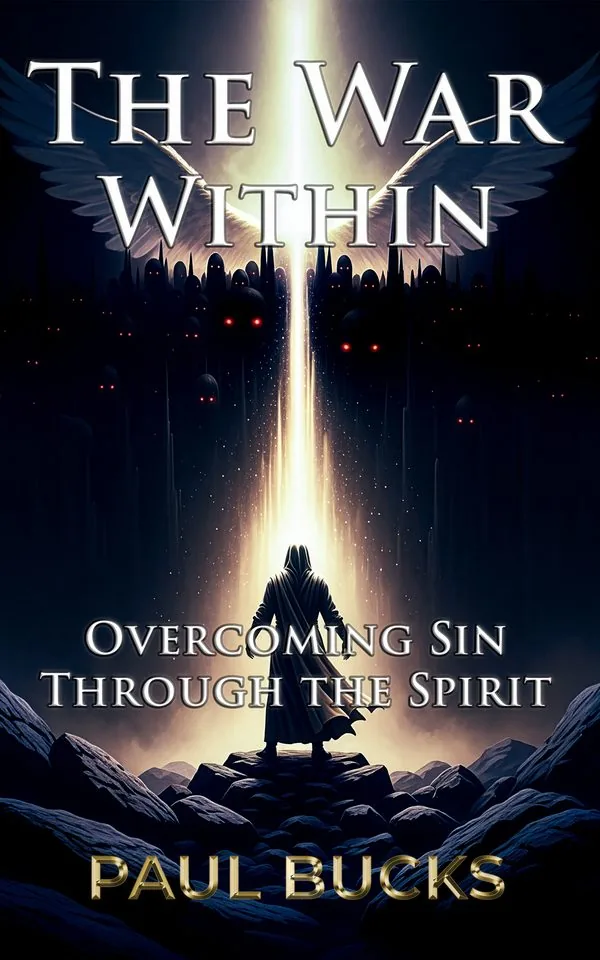
The War Within: Overcoming Sin Through the Spirit maps the whole campaign — how temptation actually works (thought → fantasy → desire → consent, and how to interrupt the sequence early), where “respectable chains” hide, Solomon’s slow drift into compromise, the armor of God, and the Spirit-dependent freedom you were never meant to fight for alone.